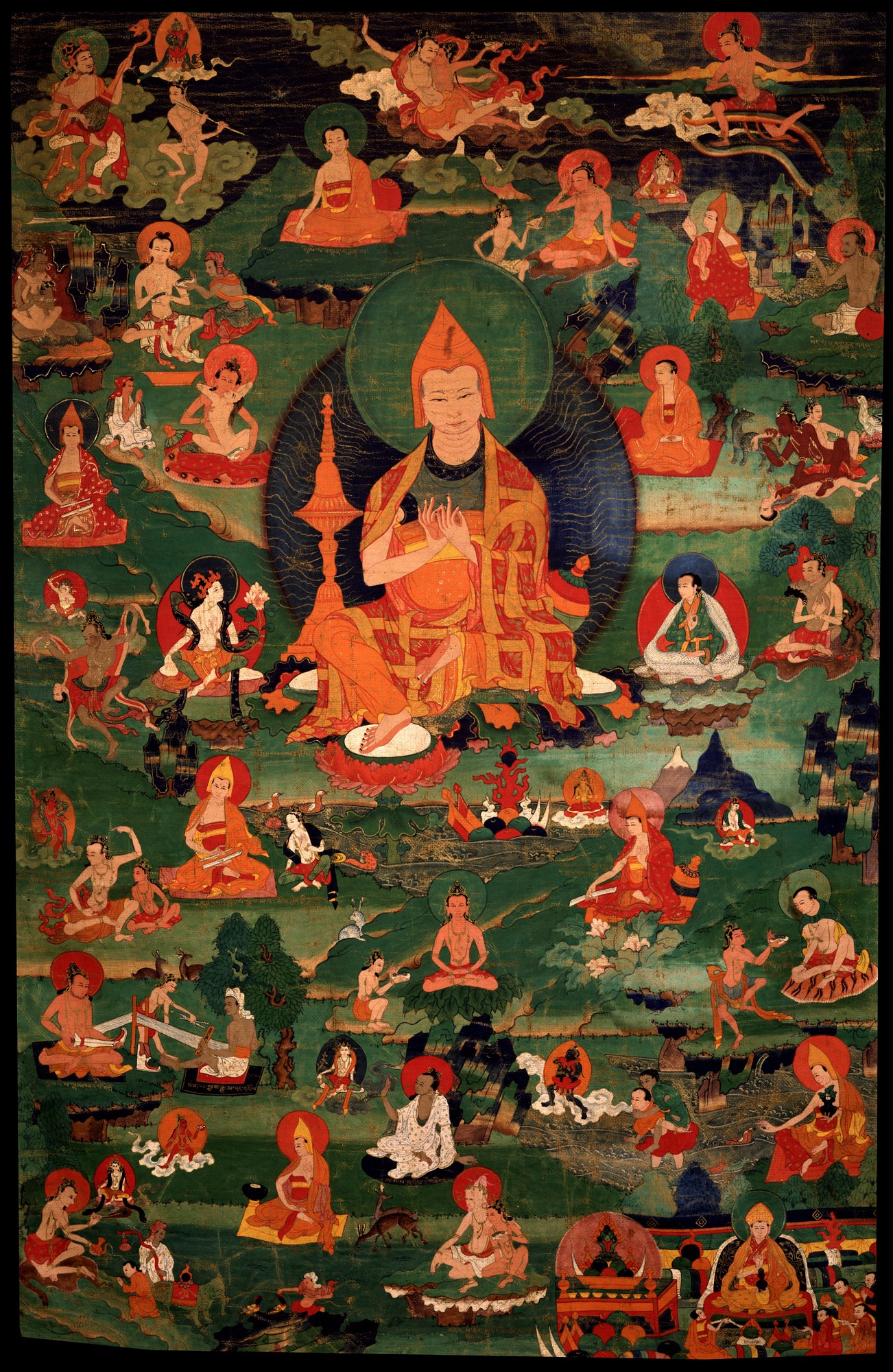
 Atiśa Dīpaṃkara Śrījñāna (982–1054) was one of the most important figures in the history of Tibetan Buddhism, specifically during the later dissemination of Buddhism in Tibet (tenpa chidar). Atiśa is best known for works such as Lamp for the Path to Enlightenment (Bodhipathapradīpa), the prototype for the stages of the path (lam rim) tradition, and for his many writings on the practice of the bodhisattva path. He was also a major influence on Lama Tsongkhapa (1357–1419), whose Geluk tradition was directly inspired by Atiśa and the Kadam tradition.
However, Atiśa also composed numerous commentaries on Vajrayāna and Mahāmudrā (the Great Seal), texts that have received little attention from scholars. Inspired by Saraha and other Indian “Great Adepts” (mahāsiddhas), Atiśa composed works such as Vajra Song of the Vajra Seat and Song of Conduct, discussing essential points of the tantric path in concise and poetic form. In other recently published texts, he commented on the practice of Mahāmudrā, revealing his significant role in the early development of this tradition.
We will explore how these works enrich our understanding of Atiśa and how they contribute to our understanding of key Vajrayāna and Mahāmudrā traditions in Tibet.
 Patrick Lambelet, PhD, is a professor of Buddhist Studies at Maitripa College (Portland, OR) and the University of Portland. He spent more than fifteen years studying with Tibetan teachers at Istituto Lama Tzong Khapa, in Italy, completing the FPMT Masters Program in Buddhist Studies in 2005. In 2024, he earned his PhD in Religious Studies at UC Santa Barbara. His research focuses on Atiśa, the Kadam tradition, and the transmission of Vajrayāna lineages from India to Tibet.